
TL;DR: Flight Pack rethinks travel-day streaming by organizing content around departure, in-flight, and arrival, while also opening the door to filters like duration, topic, and viewing intent. The goal is to make planning feel calmer, smarter, and more useful for the real moments that shape a trip.
Travel days are full of tiny decisions.
What do I download? What will my kids want to watch? Which show should I save for the plane? By the time the bags are packed and the airport is calling, streaming usually becomes one more thing to manage instead of something that helps the day feel easier.
What if streaming apps helped us prepare for the rhythm of a trip,
not just the content itself?
The problem
Streaming apps are great at helping us find something to watch at home, but travel is a different context.
On a normal day, I can browse, switch devices, and come back later. On a travel day, I need a plan that works across short windows of time, changing moods, limited connectivity, and shared family attention. The current experience often puts too much pressure on the user to figure all of that out in the moment.
That is especially true for families. A parent is not just choosing one video. They are trying to prepare for a whole sequence of moments, from leaving home to sitting on the plane to reaching the destination.
The idea
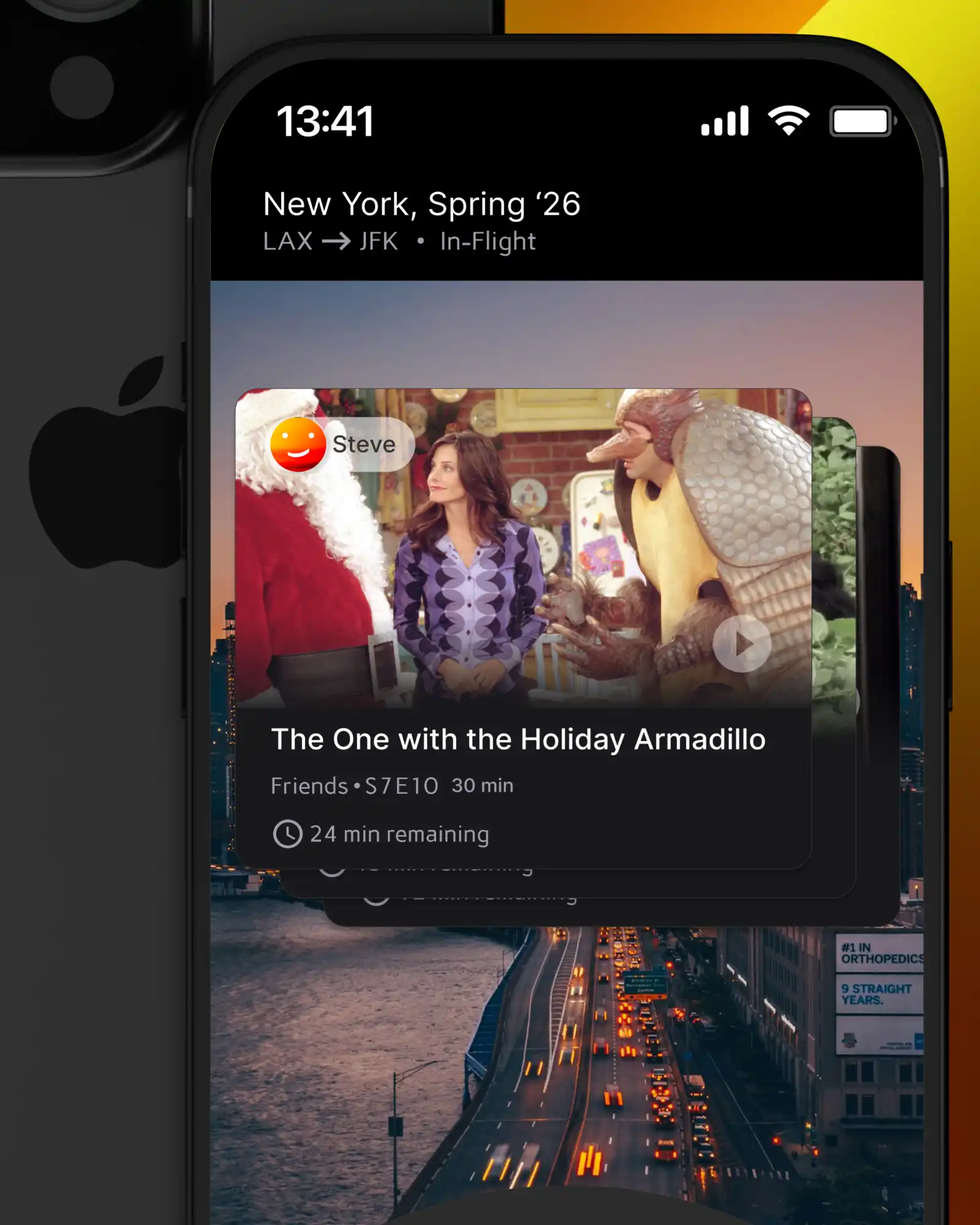
Flight Pack is a simple way to organize streaming around the trip itself, not just the content library.
The concept starts with a straightforward assumption: travel content may be easier to plan when it is tied to three parts of the journey, departure, in-flight, and arrival.
- Departure is the phase before takeoff, when people are still preparing, moving, waiting, and settling into travel mode.
- In-flight is the time on the plane itself, where offline access, longer attention spans, and comfort become more important.
- Arrival is the period after landing, when energy is lower, routines are disrupted, and people may want lighter or easier content.
This framing helps shift the product from generic browsing to contextual planning. Instead of asking only what someone wants to watch, it starts asking when and in what state they are likely to watch it.
A working assumption, not a rule
At the same time, I do not see those three segments as the only correct model.
They are simply the lens I started with. Another structure might work better, whether that is duration, topic, mood, age group, energy level, or something I have not thought about yet.
That is part of what makes this concept interesting to me. The value is not only in the interface itself, but in the product question behind it: what is the most intuitive way to help people prepare content for travel without creating more complexity?
Where the idea can evolve
The more I think about it, the more I see value in combining several approaches rather than choosing just one.
For example, the trip could still be organized by segment, but each content item could also carry tags that help people filter by duration and preference within that segment.
Possible duration filters
- Bite-size
- 25 min
- 50 min
- Less than 90 min
- Beyond 90 min
That hybrid model feels stronger to me because it preserves the narrative of the trip while adding practical flexibility. A user could browse departure content, then narrow it to shorter videos, or open in-flight and filter for something longer and more immersive.
It also opens the door to additional filtering logic like genre, family fit, solo versus shared viewing, or even energy level.
Why this matters
Most streaming experiences are reactive. They assume the user is already in browsing mode.
Flight Pack explores a more proactive model. It asks what happens when the product understands the context of the day, not just the content catalog.
That shift is what makes the concept feel meaningful to me. It turns streaming from one more last-minute task into something that can actually reduce friction during travel.
Prototype
Video walkthrough
What I would explore next
The next step would be validating whether people naturally think in trip phases at all, or whether they anchor more strongly on time, topic, or viewing intent.
I would also want to test whether the segment definitions should stay explicit in the product, so users clearly understand what each phase means rather than interpreting the labels differently.
Maybe the segment model is right. Maybe duration should lead. Maybe the strongest solution is a combination of both.
That is exactly the kind of assumption worth challenging early.
Closing thought
Flight Pack started with a simple idea: if people already plan so many parts of travel in advance, why not make streaming part of that preparation too?
The more interesting question now is not whether departure, in-flight, and arrival are the perfect structure. It is whether streaming apps can become more useful when they reflect the real rhythm of travel.
■ ■ ■ ■